

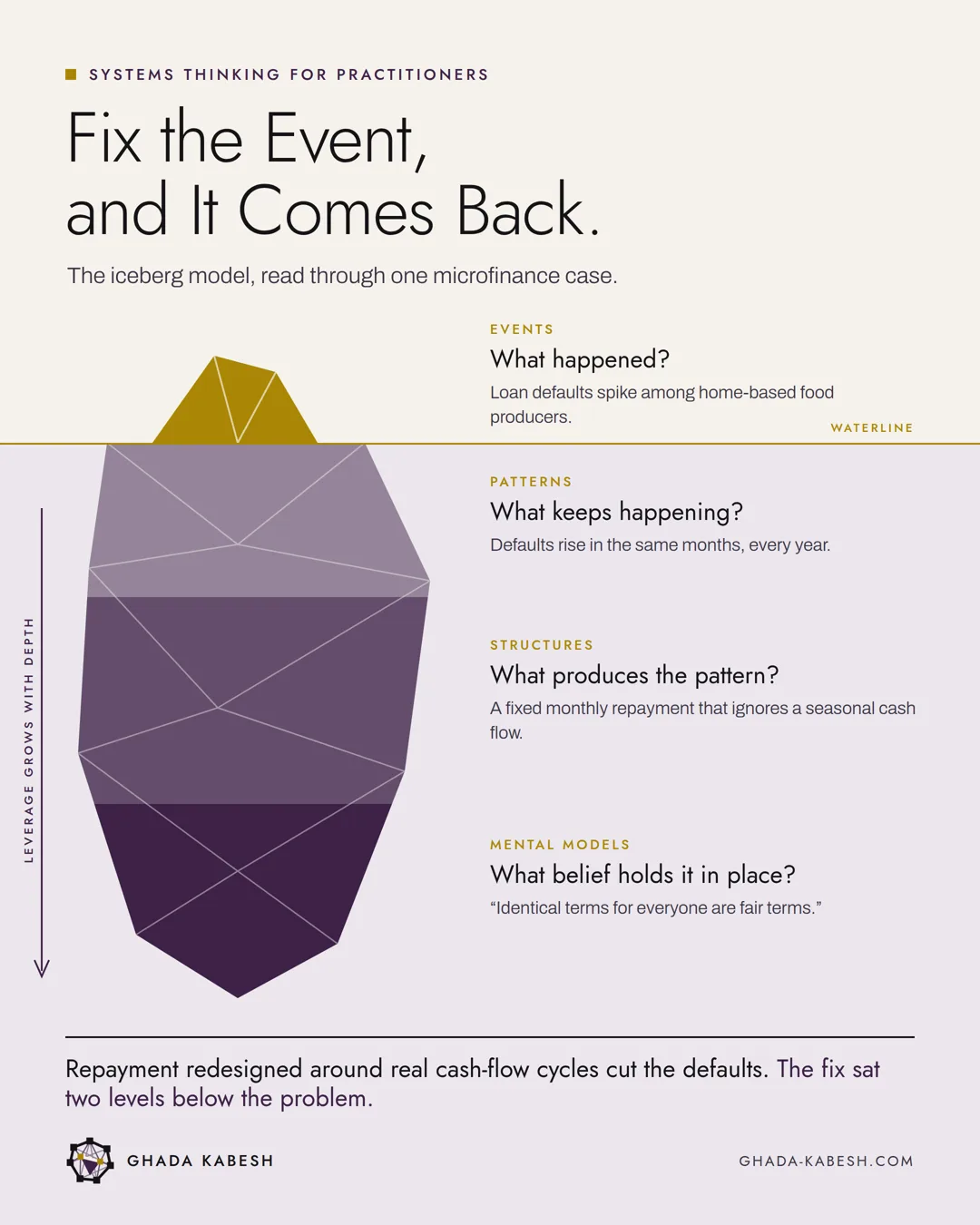
One case from my microfinance and business development services (BDS) work: home-based food producers, and a portfolio whose defaults climbed at the same time every year. The first instinct in most institutions is to work on the event. Follow up harder, collect faster, reschedule the loans that are already late. The defaults come back the next season.
The iceberg model asks four questions instead of one.
Events: What Happened?
Defaults spiked. This is the part everyone sees, and the part most responses are designed for.
Patterns: What Keeps Happening?
The defaults rose in the same months, every year. That is the first clue that this is not bad luck or bad borrowers.
Structures: What Produces the Pattern?
A fixed monthly repayment schedule, applied to businesses whose income arrives in seasons. The product was asking for the same installment in the months the business earns nothing.
Mental Models: What Belief Holds It in Place?
“Identical terms for everyone are fair terms.” For a seasonal business, identical terms are the least fair terms on offer.
Repayment redesigned around the producers’ real cash-flow cycle cut the defaults. The fix sat two levels below the problem.
The Same Iceberg Sits Under CSR and ESG
The four questions apply well beyond microfinance. A company whose CSR report lists the same activities every year but cannot say what changed is working at the level of the event. An ESG score that improves while the business model underneath stays the same is a pattern being managed, not a structure being changed. Impact-driven strategy starts below the waterline: with the structures a company actually controls, and the beliefs its leadership holds about who the business is for.
If a fix keeps coming back, it is not the fix that is wrong. It is the level.
More in the Below the Waterline series, or see how I work with companies on CSR, ESG and impact strategy.
If the same defaults keep returning in a portfolio you fund or manage, a market systems diagnostic finds the structure behind them before the next fix is designed.
Work With Me on This
I work with institutions and companies on CSR, ESG and impact strategy. See the Service →